


Jump to: North Side Wilderness | Urban Preserves | South & East SA
San Antonio is known for its rich history and iconic downtown River Walk, but step just outside the city center and you’ll discover an expansive network of protected wilderness.
Whether you’re looking for rugged Texas Hill Country trails, quiet bird-watching spots, or paved paths suitable for a peaceful stroll, the nature preserves in San Antonio offer an easy escape from the city hustle.
Editor’s Note: We work hard to provide you with accurate, updated information. However, all details are subject to change. Please verify information before heading out. This post may contain affiliate links.
If you click and make a purchase, we may earn a small commission at no extra cost to you. We only recommend experiences we truly believe in!
Curious about how we choose our content? Here’s our process.
Also check out these articles – Best Family Attractions in San Antonio, Best Scenic Walking Trails & Historic Missions in San Antonio, and Best Backpacking Trails in Texas.
Best Nature Preserves in San Antonio: North Side Wilderness
Friedrich Wilderness Park
If you need a break from city noise, Friedrich Wilderness Park will make you forget you’re still in San Antonio.
Its 600 acres of protected Hill Country habitat are home to steep limestone hills, and shady canyon trails. It’s also home to two endangered songbirds that birders travel from around the world to see: The Golden-cheeked Warbler and Black-capped Vireo. If you arrive early enough, you might hear their calls before you spot them.
The trails are great too. With roughly 10 miles of routes, you can choose an easier paved stretch or challenge yourself on rocky terrain, including the Vista Loop, where the views come with a little uphill effort.
You’ll find wooded paths, canyon edges, and enough elevation to make your legs remember the outing the next day. Bring water, wear shoes you trust, and leave the dog at home. Friedrich is one of those rare nature preserves in San Antonio where protecting the wildlife takes priority.
- When: Daily: 7:30 am – 7 pm
- Where: 21395 Milsa Dr, San Antonio, TX 78256
- How much: Free
Government Canyon State Natural Area

Image credit: Government Canyon State Natural Area – Texas Parks and Wildlife
Want to walk where dinosaurs once roamed? Government Canyon State Natural Area lets you do exactly that, although the dinosaurs have been gone for about 110 million years, so you’ll have to settle for their footprints.
Tucked into the Backcountry along the Joe Johnston Route, you’ll find the park’s famous tracks.
The roughly 5-mile round trip takes you through rugged limestone terrain to footprints left by Acrocanthosaurus and Sauroposeidon.
Aside from that, there are 40 miles of trails that take you through open grasslands, wooded canyons, and the protected Edwards Aquifer recharge zone, where the limestone helps filter the water that supplies San Antonio.
If you want a gentler outing, stick to the Frontcountry, where you can bring your leashed dog. For a bigger adventure, the Backcountry has quieter trails and more rugged terrain.
Just check the seasonal closures before you go, since the dinosaur tracks area closes during nesting season, which is usually around March through August.
Pack water, plan for a few hours on the trail, and wear shoes that can handle the rocks.
- When: Monday and Friday – Sunday: 7 am – 10 pm | Tuesday – Thursday: 7 am – 8 pm
- Where: 12861 Galm Rd, San Antonio, TX 78254
- How much: $6
Eisenhower Park
With Eisenhower Park, you won’t have to drive out of San Antonio to get a proper Hill Country escape. The park’s observation tower sits at one of the highest points in the city, and the panoramic view of downtown is the perfect reward after a little time on the trails.
On a clear day, you can see the skyline stretching out below you.
The trails are just as good as the views, too. More than six miles of routes wind through limestone outcrops, wooded creek beds, and open grassland, with options ranging from easy paved loops to the more challenging Hillview Natural Trail.
Keep an eye out for deer, native birds, and bats near the observation tower. And if you’re looking for a longer outing, Eisenhower connects to the Salado Creek Greenway, so you can turn a short hike into a full day of outdoor SA exploration. Leashed dogs are welcome, too.
- When: Monday – Friday: 9 am – 4:45 pm
- Where: 19399 NW Military Hwy, San Antonio, TX 78257
- How much: Free
Crownridge Canyon Natural Area
Crownridge Canyon Natural Area may be one of the smaller nature preserves in San Antonio, but it’s also one of the most beautiful.
Here, you’ll find a canopy-level bridge suspended over Red Oak Canyon, giving you a view into the treetops rather than the usual look up at them. It’s a little unexpected, a little magical, and a great reason to trade your usual neighborhood walk for something more memorable.
The park’s two trails also offer different ways to enjoy the landscape. The paved Red Oak Trail is an accessible 1.3-mile loop, making it a lovely choice for a relaxed outing with the family or a stroller-friendly stroll.
If you’re up for more of a challenge, the Bear Grass Trail climbs through rocky Hill Country terrain, with limestone ledges, oak and Ashe juniper woods, and a 200-foot elevation gain.
Together, the trails cover less than two miles, but they pack in plenty of scenery. Keep an eye out for the endangered Golden-cheeked Warbler in spring and early summer, and remember that pets aren’t allowed. The birds need their space.
- When: Daily: Sunrise – sunset
- Where: 7222 Luskey Blvd, San Antonio, TX 78256
- How much: Free
Top Outdoor SA Parks Trail & Urban Preserves
Phil Hardberger Park
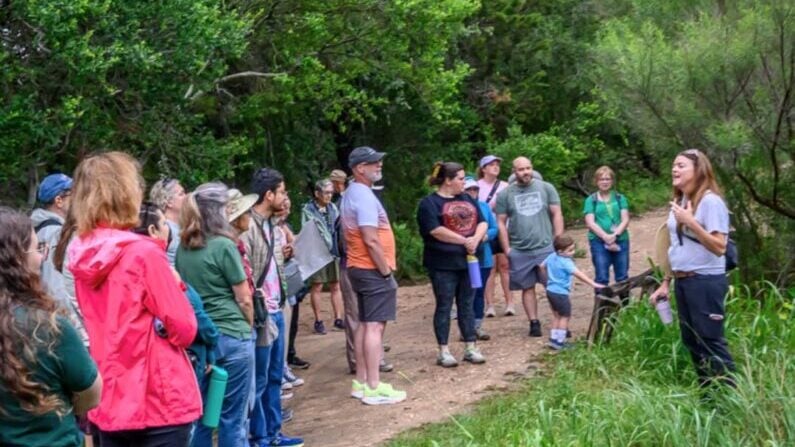
Image credit: Phil Hardberger Park Conservancy
A 400-year-old live oak is one of the biggest reasons Phil Hardberger Park exists. When former mayor Phil Hardberger was walking this land in the early 2000s, he came across the tree, which is older than the Battle of the Alamo and older than the city itself, and decided the whole 330 acres needed to be protected.
The old oak is still standing on the west side of the park, and the woodland around it has been actively restored. Volunteers planted nearly 40,000 plugs of native grass to rebuild the savanna habitat that once covered this stretch of north-central San Antonio.
Walking through that restored section, especially in the early morning before the trails get busy, gives you a peak into what this land looked like before the roads and neighborhoods arrived.
But the park’s most memorable feature is the Robert L.B. Tobin Land Bridge, where you can cross over Wurzbach Parkway without having to dodge traffic. It’s a wildlife crossing, too, and animals like deer, rabbits, and coyotes have been spotted using the hidden corridor built into the bridge.
From there, the Skywalk takes you up into the live oak canopy, where you can walk 18 to 20 feet above the ground and get a closer look at the birds that call this place home. If you’re lucky, a barred owl might fly past at eye level.
- When: Daily: Sunrise – sunset
- Where: 8400 NW Military Hwy, San Antonio, TX 78231
- How much: Free
Stone Oak Park
The 250-acre park protects two caves, Bear Cave and Cub Cave, where rainwater drains into the Edwards Aquifer.
Bear Cave is gated, but you can look over the edge from the trail, while Cub Cave is a wider, shallower limestone overhang. You’ll also find interpretive signs that explain how the aquifer recharge process works.
Apart from that, the 2.7 miles of paved trails are easy to enjoy at your own pace. There’s even a playground and outdoor amphitheater in the southern section.
Because the park sits at the meeting point of four ecoregions, there’s also a surprising variety of native plants and wildlife to look out for.
- When: Daily: 5 am – 11 pm
- Where: 20395 Stone Oak Pkwy, San Antonio, TX 78258
- How much: Free
Mud Creek Park
Walking and hiking Mud Creek Park takes a little patience, but that’s part of what makes it special.
The first stretch of trail climbs through rocky terrain beside a flood-control dam, and it’s not as easy as it looks. Once you get past that opening, though, the landscape changes.
A wooded ravine opens up below the trail, with limestone cliffs, oak-juniper canopy, and open meadows.
The roughly 60-acre natural area has about 2.25 miles of dirt trails, including the one-mile Century Tree Loop. You can wander along the rocky ridgeline or drop into the more open ravine, with deer and migrating butterflies making occasional appearances.
Dogs on leash are welcome, so your hiking buddy can enjoy the outing, too.
The trail network is a little rough around the edges, with minimal signage. So, bring a trail app, take your time, and enjoy a slower kind of outdoor SA experience.
- When: Daily: 5 am – 11 pm
- Where: 16875 Jones Maltsberger Rd, San Antonio, TX 78232
- How much: Free
South & East SA Wilderness Spaces
Medina River Natural Area
Along the El Camino Real segment, you’re walking the same ground that Spanish colonial travelers, livestock, and supply carts crossed for centuries. The evidence is still there: shallow U-shaped depressions pressed into the earth on either side of the trail, worn down by generations of use on one of the oldest roads in North America.
The Spanish weren’t the first people here, either. Indigenous peoples were using this river crossing thousands of years before the Spanish arrived. Archaeologists have documented 78 sites across the 511 acres, with the archaeological record stretching back roughly 10,000 years.
And then there’s the river. Near the water, bald cypress, pecan, and cottonwood trees create a cool, leafy corridor before the landscape gradually gives way to drier scrub, cactus, and honey mesquite farther uphill.
The Rio Medina Trail is your best bet when the Texas heat starts showing off, with plenty of shade along the water.
Don’t forget to keep an eye out for some of the 150-plus bird species recorded here, including Green Kingfishers and Painted Buntings, or cast a line at one of the fishing spots with a valid Texas license. You can even kayak or stay overnight at the campsites.
- When: Daily: 7 am – 8 pm
- Where: 15890 TX-16, San Antonio, TX 78264
- How much: Free
Mitchell Lake Audubon Center
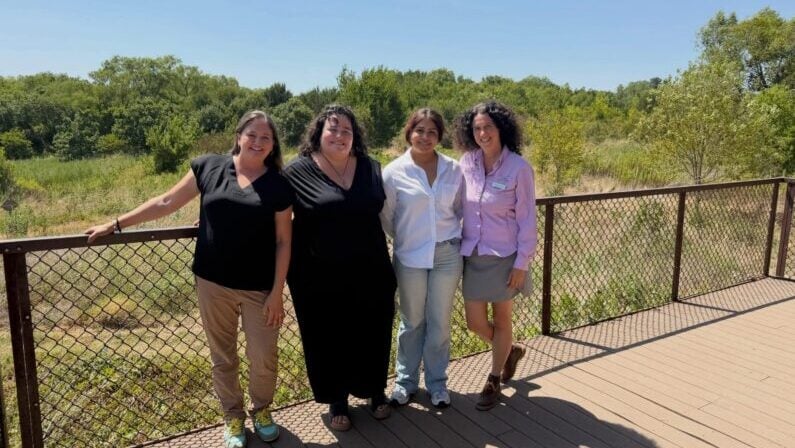
Image credit: Mitchell Lake Audubon Center
It’s hard to believe Mitchell Lake spent most of the 20th century as San Antonio’s sewage treatment site when you see it today.
The same wetlands that once received the city’s wastewater are now alive with birds, from enormous American White Pelicans gathering over the water to Roseate Spoonbills wading through the shallows.
Mitchell Lake’s location along the Central Flyway makes it a particularly rewarding stop for birdwatchers, with more than 300 species recorded across the year. The 1,200-acre refuge mixes open water, mudflats, wetlands, and native brush, giving migrating birds plenty of places to rest and refuel.
Apart from birdwatching, you can also spend a few hours wandering the 7.5 miles of trails, or join a guided birding tour.
- When: Tuesday – Sunday: 7 am – 3 pm
- Where: 10750 Pleasanton Rd, San Antonio, TX 78221
- How much: $5 for adults | $3 for students, teachers, military personnel, veterans, and National Audubon Society Members | Free for kids under 5
Walker Ranch Historic Landmark Park
At Walker Ranch, a short neighborhood walk can turn into a surprisingly good history lesson. The land sits where Panther Springs Creek meets Salado Creek, a spot people have been drawn to for thousands of years.
Archaeologists have found evidence of hunting, butchering, toolmaking, and plant processing here, while later generations used the property as part of a ranch that supplied livestock to San Antonio’s Spanish missions.
The park itself is pleasantly low-key. A half-mile paved exercise loop makes for an easy stroll, while about a mile of natural-surface trail follows the two creeks if you’d rather get a little closer to the trees and water.
Deer and squirrels are regular visitors, and the park connects directly to the Salado Creek Greenway when you feel like stretching your walk a bit farther. There are also covered pavilions for lingering over a snack.
- When: Daily: 5 am – 11 pm
- Where: 12603 West Ave, San Antonio, TX 78216
- How much: Free
Headwaters Sanctuary at Incarnate Word
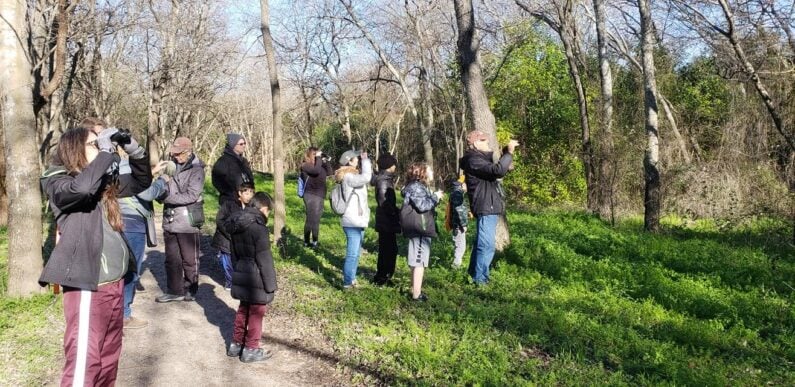
Image credit: Headwaters Sanctuary at Incarnate Word
Before the San Antonio River became synonymous with downtown patios, colorful umbrellas, and River Walk boat tours, it started quietly at a spring behind the University of the Incarnate Word.
Native peoples called the spring Yanaguana, or ‘spirit waters,’ and the name reflects what the spring actually meant: this was the water source that made human settlement in this part of Texas possible.
It’s also the historic origin point of the San Antonio River, the same river that flows through downtown and through the River Walk. Depending on the aquifer level when you visit, you may find it flowing visibly, or sitting quietly underground during a dry stretch.
The 53-acre sanctuary surrounding it is a lovely place to slow down. Two to three miles of mulched trails wind beneath mature hardwoods, including a heritage oak estimated to be around 300 years old.
- When: Monday – Friday: 8 am – 5 pm
- Where: 4503 Broadway, San Antonio, TX 78209
- How much: Free
Know Before You Go
While many of these nature preserves in San Antonio are located near the city center, several major wilderness parks (like Government Canyon and Friedrich Wilderness Park) sit on the far northern and western edges of the Bexar County line.
They are easily accessible for residents commuting from suburbs like Helotes, Boerne, and Stone Oak within a 15-to-25-minute drive.
Always remember to check dog policies before heading out, as many delicate habitat reserves prohibit pets to protect local endangered wildlife species.
Common Questions about Nature Preserves in San Antonio
Are dogs allowed at nature preserves in San Antonio?
It depends on the preserve’s classification. Fragile wilderness areas like Friedrich Wilderness Park and Crownridge Canyon Natural Area strictly prohibit dogs to protect native endangered birds.
However, parks like Eisenhower Park, Phil Hardberger Park, and frontcountry trails at Government Canyon welcome leashed dogs.
Do I need reservations to visit San Antonio natural areas?
Most city-managed natural areas (such as Friedrich, Eisenhower, and Hardberger) do not require reservations or entry fees.
However, Government Canyon State Natural Area frequently reaches capacity on weekends, so booking a day-use reservation online in advance through Texas Parks & Wildlife is highly recommended.
When is the best time of year to explore nature trails in SA?
Autumn through spring (October through April) offers ideal hiking weather in Central Texas. Summer months bring high temperatures, so early morning visits are crucial if you plan to hike exposed, unshaded trails.
Looking for more? See the upcoming Weekend Events in San Antonio.

- Things To Do This Weekend in San Antonio – September 18 – September 20, 2026 - September 17, 2026
- 10+ Best Parks & Nature Preserves in San Antonio - September 17, 2026
- San Antonio Highlights: September 14 to September 17 – Food, Music, Arts & More - September 13, 2026

